Virtual Machines vs Containers: Key Differences for DevOps Beginners
👋 Hi there! I'm a DevOps enthusiast with a deep passion for all things Cloud Native. I thrive on learning and exploring new technologies, always eager to expand my knowledge and skills. Let's connect, collaborate, and grow together as we navigate the ever-evolving tech landscape! SKILLS: 🔹 Languages & Runtimes: Python, Shell Scripting, YAML 🔹 Cloud Technologies: AWS, Microsoft Azure, GCP 🔹 Infrastructure Tools: Docker, Terraform, AWS CloudFormation 🔹 Other Tools: Linux, Git and GitHub, Jenkins, Docker, Kubernetes, Ansible, Prometheus, Grafana

👉 𝐖𝐡𝐚𝐭 𝐢𝐬 𝐚 𝐕𝐢𝐫𝐭𝐮𝐚𝐥 𝐌𝐚𝐜𝐡𝐢𝐧𝐞?
A Virtual Machine (VM) is a software-based emulation of a physical computer, allowing multiple operating systems to run on a single physical host. Each VM operates as an independent and isolated instance with its own virtualized hardware components.
Virtual Machine is a system which acts exactly like a computer. VMs are like physical hardware turning one server into many servers. It uses technology called hypervisor which allows multiple VMs to run on a single machine. Each VM has a full copy of an operating system, the application, necessary binaries and libraries. VMs are bulky in nature.
👉 𝐖𝐡𝐚𝐭 𝐚𝐫𝐞 𝐂𝐨𝐧𝐭𝐚𝐢𝐧𝐞𝐫𝐬?
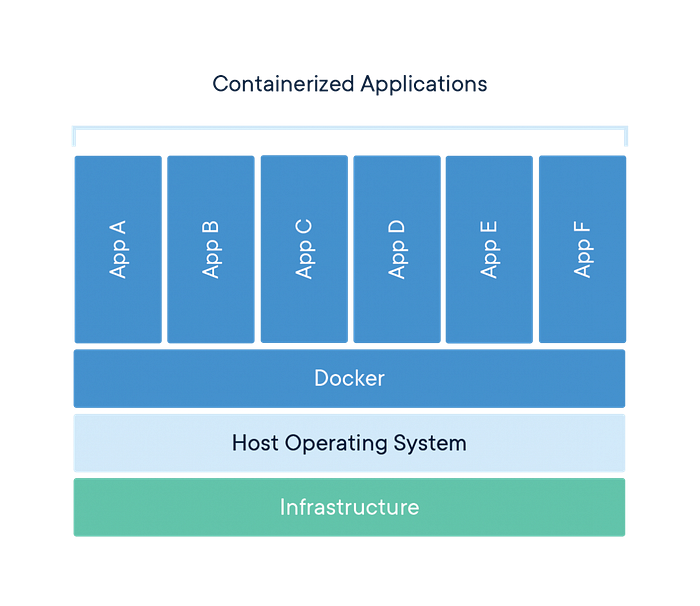
Containers are packages of software that contain all of the necessary elements to run in any environment. In this way, containers virtualize the operating system and run anywhere, from a private data center to the public cloud or even on a developer’s personal laptop. Containerization allows our development teams to move fast, deploy software efficiently, and operate at an unprecedented scale.
Containers are lightweight, portable, and self-contained executable images that contain software applications and their dependencies. They are used to deploy and run applications in a consistent way across different environments, such as development, staging, and production. Containers are typically deployed from an image by using an orchestration platform, like Kubernetes. These platforms provide a way to manage and deploy containers at scale.
👉 𝐝𝐢𝐟𝐟𝐞𝐫𝐞𝐧𝐜𝐞𝐬 𝐛𝐞𝐭𝐰𝐞𝐞𝐧 𝐂𝐨𝐧𝐭𝐚𝐢𝐧𝐞𝐫𝐬 𝐚𝐧𝐝 𝐕𝐌𝐬.
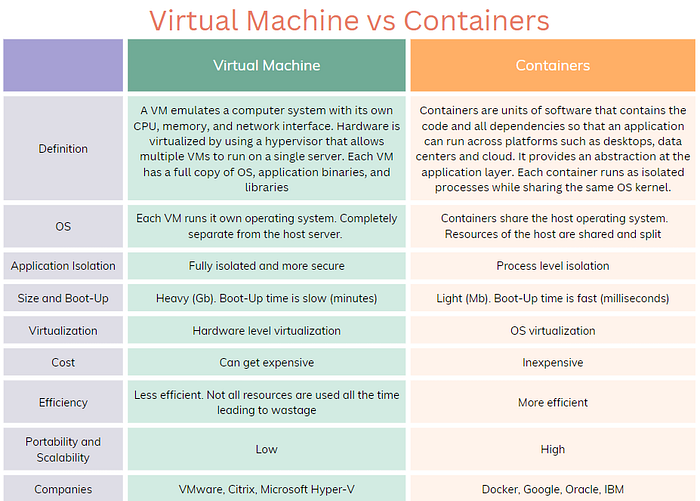
• 𝐎𝐒 𝐚𝐧𝐝 𝐀𝐫𝐜𝐡𝐢𝐭𝐞𝐜𝐭𝐮𝐫𝐞: Virtual machines have a host OS and the guest OS inside each VM. Guest OS can be any OS, like Linux or Windows, irrespective of host OS. While Docker containers host on a single physical server with a host OS, which shares among them. As it shares the host OS between containers it makes them light and increases the boot time.
• 𝐏𝐨𝐫𝐭𝐚𝐛𝐢𝐥𝐢𝐭𝐲: Virtual machines are isolated from their OS, and so, they cannot be ported across multiple platforms. Docker containers can be easily ported across different platforms as they are self-contained and can run applications in any environment, and since they don’t need a guest OS.
• 𝐏𝐞𝐫𝐟𝐨𝐫𝐦𝐚𝐧𝐜𝐞: Virtual machines are more bulkier than Docker containers as the virtual machines need to load the entire OS to start. The lightweight architecture of Docker containers are light weight as they don’t have a guest OS.
• 𝐕𝐢𝐫𝐭𝐮𝐚𝐥𝐢𝐳𝐚𝐭𝐢𝐨𝐧: Virtual Machine use Hardware level virtualization and Containers use OS level virtualization.
🙏Thank you for reading!
💬 Have questions or thoughts on Docker? Leave a comment below!
👉 Want more Docker content? Follow me on Hashnode
🔗 Explore More Docker Tutorials
Next Blog: Docker Architecture Explained: Components, Flow & How It Works
Enjoyed reading? Buy me a coffee ☕


